
TMV fault finding
TMV Servicing Specialists arranges TMV fault finding across the UK when a mixing valve stops behaving. A partner engineer works out why the water is too hot, too cold, unsteady, slow or crossing between supplies, makes the outlet safe and tells you what it will take to fix. Diagnosis comes before parts, so money is not spent on the wrong one.
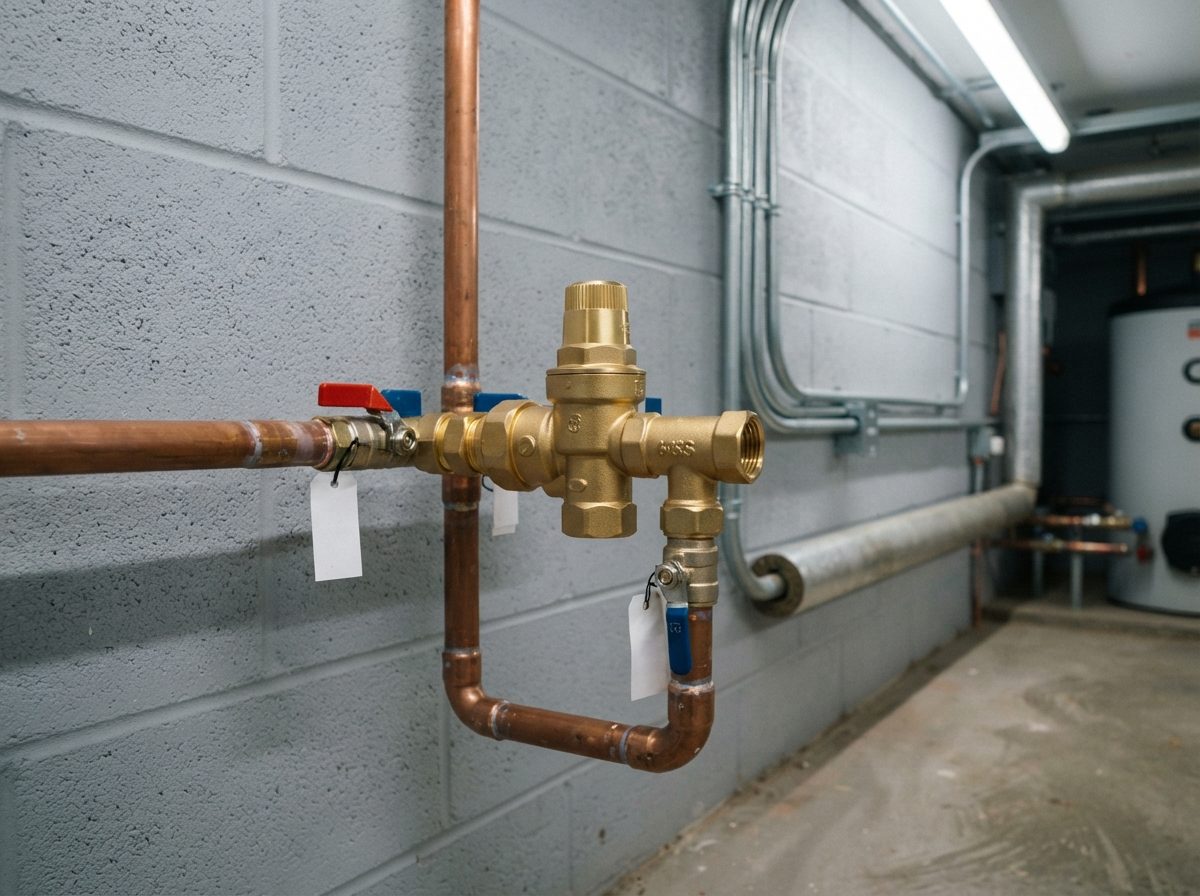
Diagnosing a valve that is misbehaving
When a thermostatic mixing valve goes wrong, the symptom at the tap rarely points straight at the cause. Water that is too hot might mean a scaled cartridge, a blocked cold strainer, a cold supply that has warmed up or a valve set wrongly after other work. Low flow might be the valve, its strainers, an isolator half closed, or a pressure problem elsewhere in the system. TMV fault finding means testing each possibility in a sensible order rather than replacing the cartridge and hoping.
This service is for anyone with a valve showing a specific problem: a parent who has noticed the bath running hotter than it used to, a care home where a resident's basin has turned lukewarm, a school where a set of washbasins swings between hot and cold, a building manager whose cold taps are running warm. It is also the right step when a routine test or service has flagged a valve as failed and you need to know why.
If a valve is known to be sound and only needs its regular check, routine servicing or testing is the better fit. And where the cause is already clear, for example a cartridge that a previous visit identified as worn, you can go straight to repair. Fault finding earns its place when the cause is uncertain or more than one thing could be wrong.
Common symptoms and what they usually mean
These are the faults most often reported, with the causes an engineer typically checks first. Every site is different, so treat them as starting points rather than answers.
- Water too hotOften a blocked cold strainer, a scaled or sticking cartridge, or a valve set too high. It can also be a cold supply running warm. A scald risk, so the outlet needs to be made safe.
- Water too cold or lukewarmCommonly a low hot supply temperature, a blocked hot strainer or a cartridge that has drifted. Check the hot water system is reaching its normal temperature.
- Temperature swingsUsually unequal or fluctuating supply pressures, for example when other outlets open, or a cartridge too scaled to respond smoothly.
- Low flowBlocked strainers, a partly closed isolator, scale in the valve body or a valve that does not suit the supply pressures on site.
- No flow at allThe valve may be in fail-safe because one supply has failed or is blocked, or an isolator has been left closed. Check both supplies first.
- Hot water in cold pipesCross-flow through a check valve that is stuck open or missing. It warms the cold system and needs putting right.
- Fails its fail-safe testWith the cold isolated, the valve keeps delivering hot water. Usually a scaled or failed cartridge. The outlet should not be used until it is fixed.
Before the engineer arrives
-
Write down the symptoms
Note what happens, when it started, whether it is constant or only at busy times, and which outlets are affected. Patterns narrow down the cause.
-
Check the obvious
Make sure the boiler or cylinder is working normally and that no isolators near the valve have been turned during other work.
-
Make the outlet safe
If the water is too hot or the valve has failed its fail-safe, take the outlet out of use with a clear notice until it is looked at.
-
Recent changes
New boilers, pumps, pressure changes or plumbing work nearby are often behind a sudden fault. Tell the engineer about them.
Good to know about TMV faults
-
One fault can hide another
A cleaned strainer may cure low flow and reveal a cartridge that has also drifted. The engineer will retest after each fix.
-
The supply can be the problem
A valve can only blend what it is given. Hot water below about 50°C or unbalanced pressures cause symptoms that no work on the valve will cure.
-
Valve type must suit the supply
Valves are approved for high or low pressure use. A valve fitted on the wrong supply type may never perform properly, however well it is serviced.
-
Cross-flow is not only a comfort issue
Warm water in cold pipes can encourage bacterial growth. HSG274 Part 2 expects cold water to be kept cold, so cross-flow should be investigated promptly.
How fault finding works
- 1
Tell us the symptom
Use the enquiry form to describe what is happening, which outlets are affected and when it started.
- 2
Alex finds an engineer
Alex matches the call-out to a partner engineer covering your area, passing on what you have described.
- 3
Price set out in advance
We confirm the price for the diagnostic visit before work starts. If the fix needs parts or more time, that is priced and agreed with you separately.
- 4
Diagnosis on site
The engineer takes readings, checks supplies, strainers, check valves and the cartridge, and makes the outlet safe if needed.
- 5
Findings and options
You should expect a written note of what was found, readings taken, any work done and the recommended fix.
TMV fault finding questions
Why has my TMV suddenly started running hot?
Common causes are a blocked cold strainer, a scaled cartridge or a change in supply pressure. It is a scald risk, so stop using the outlet until it has been checked.
Can a fault be fixed on the same visit?
Often, if the cause is a blocked strainer or needs only adjustment. Where parts are needed, they may have to be ordered and fitted on a return visit.
Why do I get no water at all from the mixed outlet?
The valve may have shut down because one supply has failed or a strainer is fully blocked. Check that both hot and cold water are reaching the valve.
Is warm water from the cold tap caused by the TMV?
It can be. A failed check valve on a mixing valve lets hot water cross into the cold supply. Other causes exist, so it needs testing.
Should I turn the valve up if the water is lukewarm?
Not without knowing why. If the hot supply is low, turning the valve up may make it scald once the supply recovers.
What if the valve cannot be fixed?
The engineer will explain why, for example a discontinued model or a corroded body, and a replacement valve will be the recommendation.
Does fault finding include a fail-safe test?
Yes. Proving that the valve shuts down when the cold supply is lost is part of confirming it is safe to return to use.
Where fault finding leads
- TMV repairCartridges, seal kits and check valves fitted once the fault has been traced.
- TMV replacementA new valve where the old one is beyond repair or wrong for its supply.
- TMV fail-safe test guideWhat the fail-safe test is, how it is done and what a failure means.
- Safe hot water temperaturesThe outlet temperatures commonly used for baths, showers and basins.
Report a TMV fault
Describe what the valve is doing in an enquiry. Alex will match it to a partner engineer, and the price is confirmed before work starts.
Send an enquiry