
TMVs and Legionella
Thermostatic mixing valves protect people from scalding, but they also create a stretch of pipework where water sits at a temperature bacteria like. This guide explains where the Legionella risk comes from, how valve position and pipe length affect it, why flushing and strainer hygiene matter, and what records a water safety logbook should hold.
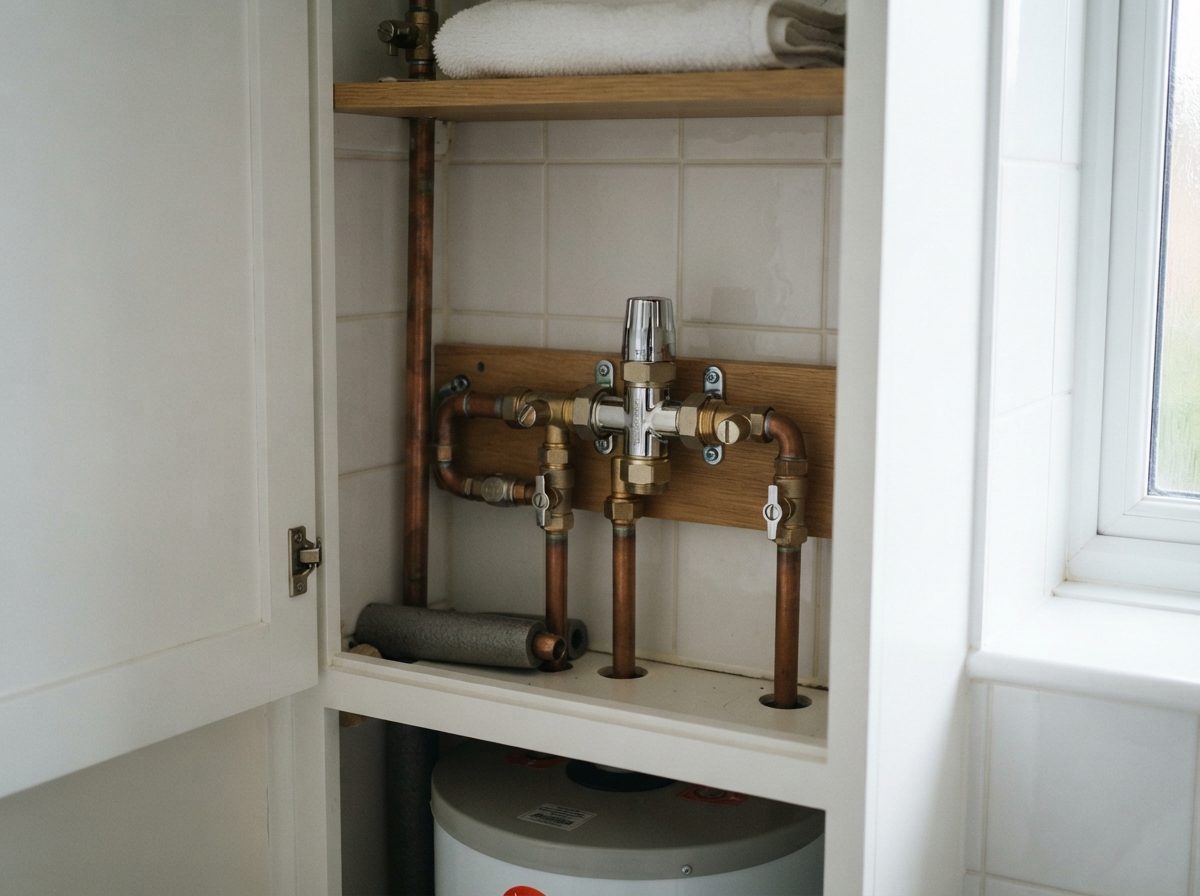
Where the risk comes from
Legionella bacteria multiply most readily in water between about 20°C and 45°C, especially where water stands still and where there is sediment, scale or biofilm for them to live in. Breathing in fine droplets of contaminated water, such as spray from a shower, can cause Legionnaires' disease.
Mixed water from a TMV is usually set somewhere between 38°C and 44°C, right in the range bacteria prefer. In the pipework upstream of the valve, the hot supply should be hot enough to control bacteria. Downstream, between the valve and the outlet, there is nothing to stop them growing except keeping that length of pipe short and making sure water moves through it regularly.
Dead legs and mixed-water runs
-
What a dead leg is
Any length of pipe where water can sit still. After a TMV, the pipe carrying mixed water to the outlet acts as a warm dead leg between uses.
-
Keep it short
Legionella guidance asks for mixed-water pipework to be kept as short as possible, which means fitting the valve close to the outlet it serves.
-
One valve, one outlet
Healthcare guidance generally prefers each valve to serve a single outlet, because a valve feeding a long run to several outlets holds more warm water.
-
Redundant pipework
Pipes left behind after outlets are removed or moved should be cut back to the main run, so they cannot hold stagnant water.
-
Thermostatic taps
Where the mixing happens inside the tap, the mixed-water run almost disappears, which is one reason they are chosen for some basins.
Getting the supplies right
A TMV can only do its job if the water reaching it is correct. Legionella guidance in Great Britain, set out in the HSE Approved Code of Practice L8 and HSG274 Part 2 (with the HSENI equivalent in Northern Ireland), expects hot water to be stored at about 60°C and to reach outlets at at least 50°C within a minute, or 55°C in healthcare premises. Cold water should stay as cool as possible, below 20°C.
Where outlets are fed through TMVs, the temperature check for Legionella purposes is made on the hot supply entering the valve. If that supply is too cool, the problem lies upstream in the hot water system, and turning the TMV setting up will not fix it. Equally, turning the storage temperature down to make outlets feel safer gives bacteria an opportunity throughout the system.
Flushing little-used outlets
-
Why it matters
Water that sits in a warm mixed-water pipe for days can allow bacteria to multiply. Running the outlet replaces it with fresh water from the hot and cold supplies.
-
How often
Little-used outlets are commonly flushed at least weekly, or as the risk assessment directs. Showers in empty rooms, spare bathrooms and seasonal facilities are typical examples.
-
How to flush
Run the outlet long enough to draw fresh water through, in a way that limits spray. For showers, the method set out in the written scheme should be followed.
-
Record it
Each flush should be logged with the outlet, date and who did it, so gaps are easy to see.
-
Remove what is not needed
If an outlet is never used, removing it and cutting back the pipework is often better than flushing it forever.
Strainers, scale and hygiene
The strainers on a TMV's inlets trap debris that would otherwise damage the cartridge. That debris, along with scale, can also provide a home for biofilm. Cleaning strainers on a regular cycle, commonly once a year or more often where the risk assessment says so, keeps both the valve and the water in better condition.
When strainers, cartridges or check valves are removed, the parts and the valve body should be handled hygienically, and any parts that are badly fouled should be replaced rather than reused. Some sites disinfect components as part of servicing, following their written scheme. Shower heads and hoses on outlets fed by TMVs also need regular cleaning and descaling as part of the Legionella programme.
What the water safety logbook should hold
-
A list of valves
Where each TMV is, which outlet it serves, its make, model and approval, and its set temperature.
-
Test results
Mixed and supply temperatures and fail-safe outcomes for every test, with dates.
-
Servicing and repairs
What was done to each valve, including strainer cleaning, cartridge changes and replacements.
-
Flushing records
Which little-used outlets were flushed, when and by whom.
-
Actions and follow-up
Any problems found, what was done about them and when they were closed off.
TMV and Legionella questions
Do TMVs increase the risk of Legionella?
They can if they are fitted far from outlets, left unused or poorly maintained. Fitted close to the outlet, kept clean and used or flushed regularly, the extra risk is small and is outweighed by the scald protection.
Should TMVs be removed to control Legionella?
Not where a scald risk exists. The guidance aims to manage both risks together, not trade one for the other.
Can TMVs be thermally disinfected?
Some valves and systems allow it, but it has to be planned so that outlets do not deliver scalding water to users. The manufacturer's instructions and the written scheme should be followed.
Who is responsible for Legionella control?
The duty holder, usually the employer or the person in control of the premises, often with a named responsible person who manages the written scheme.
How far from the outlet should a TMV be?
As close as practical. Healthcare guidance asks for the mixed-water pipe to be kept as short as possible, and a survey can flag valves fitted a long way from their outlets.
Do I need to flush showers in empty hotel rooms?
Rooms left unused for a period are a typical case for flushing in line with the risk assessment, commonly at least weekly, with each flush recorded.
Related pages
- TMV strainer cleaningRegular cleaning of inlet strainers to keep valves and water in good condition.
- TMV surveysIdentifying long mixed-water runs, dead legs and poorly sited valves.
- HotelsTMVs in guest rooms, spas and staff areas.
- Leisure centres and gymsShowers and changing rooms with heavy, uneven use.
Want your TMVs checked as part of your water safety plan?
Send an enquiry with the number of valves, the site type and what your logbook already covers. We will match the job to a partner engineer and confirm the price before work starts.
Send an enquiry