
TMV servicing for schools and nurseries
TMV Servicing Specialists arranges TMV servicing for schools and nurseries across the UK. Visits can be planned for half terms and holidays, so children's washrooms, changing areas and nursery sinks are tested while the building is quiet.
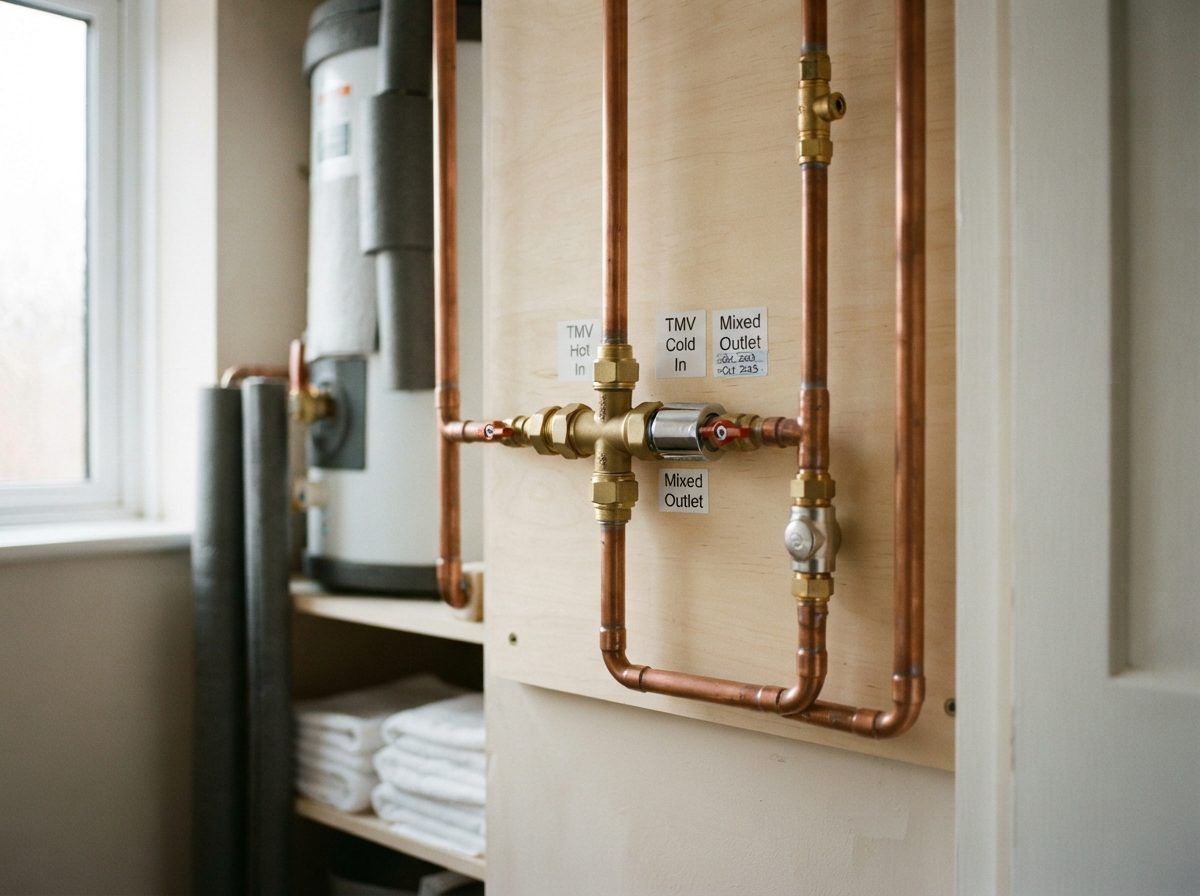
Keeping children's hot water at a safe temperature
Young children have thinner skin than adults and burn more quickly at the same water temperature. They also play with taps, wash their hands without checking the heat and may not pull away fast enough. Schools and nurseries usually fit thermostatic mixing valves to washbasins in toilets, changing areas, nursery rooms and any showers, so the water that reaches a child stays at a safe temperature.
This page is for business managers, site managers, premises officers, nursery owners and academy trust estates leads. It covers primary and secondary schools, nursery and early years settings, special schools and SEN units with hygiene rooms and showers, and independent schools with boarding facilities.
If a washroom is being refurbished or new valves are fitted, commissioning is the right job. If outlets are running cold or scalding during term, a fault-finding visit should come first. For trusts with many schools, a maintenance contract or asset register can bring every site onto the same schedule.
What a school or nursery visit includes
The engineer works through each washroom and teaching area, testing every valve that serves pupils or staff.
- Basin temperature checksEach washbasin in pupil toilets, classrooms and nursery rooms is checked against its target mixed temperature.
- Showers and hygiene roomsShowers in changing rooms, sports areas and SEN hygiene rooms are tested, including any with height-adjustable or assisted equipment.
- Fail-safe check on each valveThe cold feed is shut off to confirm the valve stops or cuts the flow, then restored to check the temperature recovers.
- Strainer cleaningStrainers are cleaned where the service plan calls for it. In hard water areas these can scale up between visits.
- Resetting drifted valvesValves running too hot or too cold are adjusted, with both readings recorded.
- Records for the premises fileResults are written up per outlet so they can sit alongside your Legionella logbook and other compliance records.
Planning around the school calendar
-
Book holiday dates early
Half terms and summer holidays are popular for site work. Give a few options so a partner engineer can be matched.
-
Arrange keys and a site contact
Someone needs to open washrooms, plant rooms and locked areas, and know where isolation valves are.
-
Run little-used outlets before the visit
Outlets that have sat unused through the break should be flushed, as your Legionella scheme requires, before testing.
-
Note any SEN-specific outlets
Tell us about hygiene rooms, assisted showers or changing places toilets so they are included and priced.
Good to know for schools
-
Lower temperatures are common for little ones
Many early years settings choose a basin temperature lower than the adult figures in D 08. Your risk assessment sets the number.
-
Holidays raise Legionella risk
Water standing in pipes over long breaks can let bacteria grow. Flushing little-used outlets weekly, and recording it, matters as much as TMV testing.
-
Each nation has its own inspectorate
Ofsted, Education Scotland and the Care Inspectorate, Estyn and Care Inspectorate Wales, and the Education and Training Inspectorate and health trusts in Northern Ireland may all ask how premises risks are managed.
-
Pupils can tamper with valves
Exposed valves and adjustable tap handles can be knocked or fiddled with. Ask the engineer to note any that would be better boxed in or relocated.
How a school booking works
- 1
Enquiry form
Send the school name and area, outlet numbers and the dates the building is empty.
- 2
Matched to an engineer
Alex matches the job to a partner engineer who can attend on one of your preferred dates.
- 3
Price agreed
The price reflects outlet count, access and any SEN equipment, and is confirmed before work begins.
- 4
Holiday visit
The engineer works through washrooms with your site contact while pupils are away.
- 5
Paperwork
A visit usually leaves you with readings per valve, fail-safe results, service records and any recommended repairs.
School and nursery TMV questions
Do schools have to fit TMVs?
No single law names TMVs in every school, but duties under health and safety law mean scald risks must be controlled. TMVs are the usual way to do that at children's outlets.
What temperature should school basins be?
D 08 quotes 41°C as a maximum for washbasins, and many schools and nurseries choose a lower setting for young children through their risk assessment.
Can the work be done during term?
Yes, if washrooms can be closed in turn. Most schools prefer holidays because it avoids disruption.
How often should school TMVs be checked?
Many settings test at least once a year and clean strainers at the same time, with more frequent checks where valves drift or water is hard.
Do you cover academy trusts with several sites?
Yes. Sites anywhere in the UK can be booked together, and each one gets its own set of records.
What happens if a valve is faulty?
The engineer reports it, the outlet can be taken out of use, and a repair or replacement is priced for you to approve.
Related services and sectors
- Thermostatic tapsTaps with a built-in thermostatic cartridge, common in pupil washrooms.
- TMV strainer cleaningClearing scale and debris that cause valves to drift or lose flow.
- TMV maintenance contractsA visit schedule built around school holidays for one or many sites.
- Student accommodationTMV work in halls and residences for older students.
Plan your school's TMV visit
Tell us where the school or nursery is, how many outlets have valves, and which holiday dates work. Alex will match a partner engineer and agree the price before any visit is booked.
Send an enquiry