
TMV access panel and isolation upgrades for hidden valves
TMV Servicing Specialists arranges TMV access upgrades across the UK for valves that are boxed in, tiled over or hidden above ceilings. A partner engineer adds access panels and isolating valves, or moves the valve nearer its outlet, so it can be tested and serviced without taking the room apart.
The problem with a valve you cannot reach
Many TMVs were fitted behind bath panels sealed with silicone, inside ducts finished in tiles, or above plasterboard ceilings with no hatch. They work until they need attention. Then a routine test becomes a building job, and in practice the test often does not happen. Valves without isolating valves on their supplies add to the problem, because servicing one outlet means shutting down a whole bathroom, floor or building.
Access upgrades are for anyone who has been told a valve could not be tested or serviced, who has a register full of entries marked no access, or who is planning a refurbishment and wants to put right what was done badly first time. Care homes, housing providers, schools and hotels see this often because valve access was rarely planned when bathrooms were built.
If the valve itself is failing as well as hidden, it is usually worth combining the access work with a replacement. If you do not yet know where all your valves are, a survey is the starting point. Access upgrades are the right service when the valve is known, is otherwise serviceable, and simply cannot be reached or isolated properly.
What an access upgrade can include
Each site is different. The engineer proposes the least disruptive change that gives lasting access to the valve and its isolators.
- Locating the valveWhere the position is unknown, the engineer traces the pipework from the outlet, checks ducts and voids and confirms where the valve sits before anything is opened.
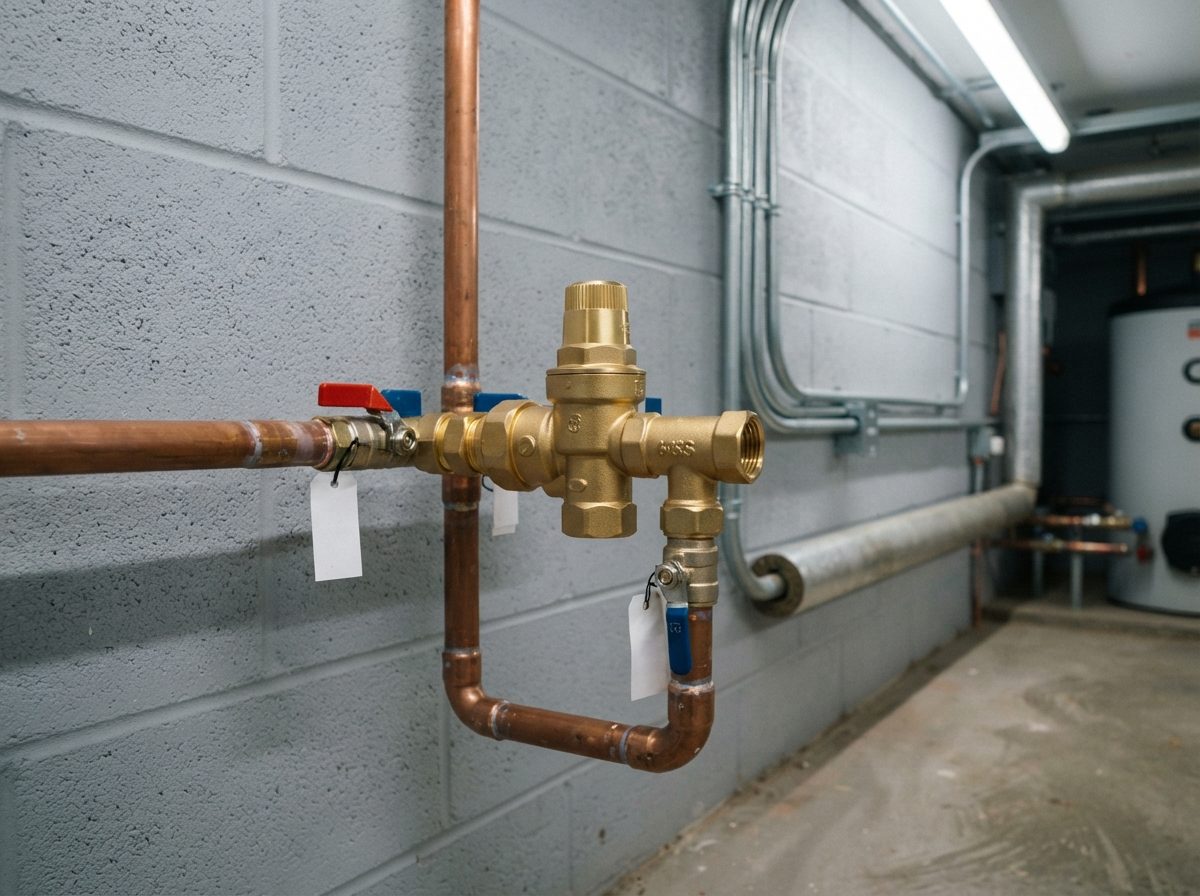
- Fitting an access panelA removable panel is fitted in the tiled wall, boxing or ceiling directly in front of the valve, sized so the valve, strainers and isolators can be worked on.
- Adding isolating valvesIsolators are fitted on the hot and cold supplies to the valve, so that outlet can be shut off on its own for testing, servicing or a fail-safe check.
- Adding strainersWhere the inlets have no strainers, they are added so debris is caught before it reaches the valve's working parts.
- Relocating the valveSometimes the better answer is to move the valve somewhere accessible, such as under the basin or into an adjacent cupboard, rather than opening a finished wall.
- Shortening the dead legA valve some distance from its outlet leaves a long run of mixed water. Moving it closer reduces that run, which supports Legionella control as well as access.
- Making goodThe opening is finished neatly around the panel. Matching tiles and decoration are discussed beforehand, because exact matches are not always available.
Before arranging access work
-
Mark which valves are a problem
List the outlets where the valve could not be reached or isolated, with any notes from previous visits or the register.
-
Check for spare tiles or finishes
Spare tiles from the original fit make a neater result. If there are none, decide whether a contrasting panel is acceptable.
-
Plan around the room's use
Rooms in daily use, such as resident bathrooms or school toilets, need the work timed so alternative facilities are available.
-
Consider the outlet's wider future
If the bathroom is due for refurbishment soon, it may be better to plan valve access into that work instead.
Good to know about valve access
-
No access usually means no test
A valve that cannot be reached is a valve that is not being tested. Records that show repeated no access entries are a gap in your scald risk control.
-
Isolation makes testing practical
A fail-safe test involves isolating the cold supply to the valve. Without isolators, that means shutting down far more than one outlet.
-
Dead legs matter for Legionella
HSG274 Part 2 guidance favours keeping mixed-water runs short. Moving a distant valve closer to its outlet helps scald control and water hygiene together.
-
Water fittings rules still apply
Any change to pipework connected to the supply falls under the water fittings regulations for that nation, so relocation work follows the same rules as a new installation.
How access work is arranged
- 1
Describe the hidden valves
Use the enquiry form to tell us which outlets are affected, where you think the valves are and how they are boxed in. Photos of the room help a lot.
- 2
Matched to a partner engineer
Alex matches the job to a partner engineer in your area who carries out this kind of opening-up and pipework work.
- 3
Option and price agreed
The engineer proposes a panel, isolators, relocation or a mix, and the price is agreed with you before anything is cut open.
- 4
The upgrade
The valve is reached, isolators and strainers added or the valve moved, and the opening made good.
- 5
Test while it is open
The valve is usually tested or serviced while access is fresh, and you receive the readings and a note of what was changed.
Questions about TMV access panels
Can an access panel go in a tiled wall?
Yes. Tile-faced and plain panels are both available. A tile-faced panel can carry matching tiles if spares exist.
Is moving the valve better than adding a panel?
Sometimes. If the valve is far from the outlet or behind a finished wall, moving it under the basin or into a cupboard can give easier access and a shorter dead leg.
Why add isolating valves?
They let one valve be shut off for testing or servicing without turning off water to the rest of the room or building, and they make the fail-safe test straightforward.
Will the room be out of use?
For part of the visit, yes, while the supplies are isolated and the opening is made. The engineer can say how long when planning the job.
Can the valve be serviced on the same visit?
Usually, yes. Doing a test or service while the valve is exposed avoids a return visit.
How is access work priced?
By the finishes involved, the amount of pipework change and whether the valve is moved. The price is agreed before work starts.
Work that often goes with access upgrades
- TMV full serviceStrip, clean and reset the valve while it is finally accessible.
- TMV surveysFind every valve, including the hidden ones, before planning access work.
- TMV replacementSwap a failing valve at the same time as making it reachable.
- TMVs and LegionellaWhy short mixed-water runs matter for water hygiene.
Valves you cannot get to?
List the outlets where the valve is boxed in or has no isolation. Alex will match the work to a partner engineer and agree the price before anything is opened up.
Send an enquiry