
Thermostatic tap servicing
TMV Servicing Specialists services thermostatic taps on basins, sinks and clinical wash-hand stations across the UK. These taps carry their own thermostatic cartridge, so the mixing valve sits in the tap body rather than under the basin. A partner engineer cleans, tests and resets each tap and records the result.
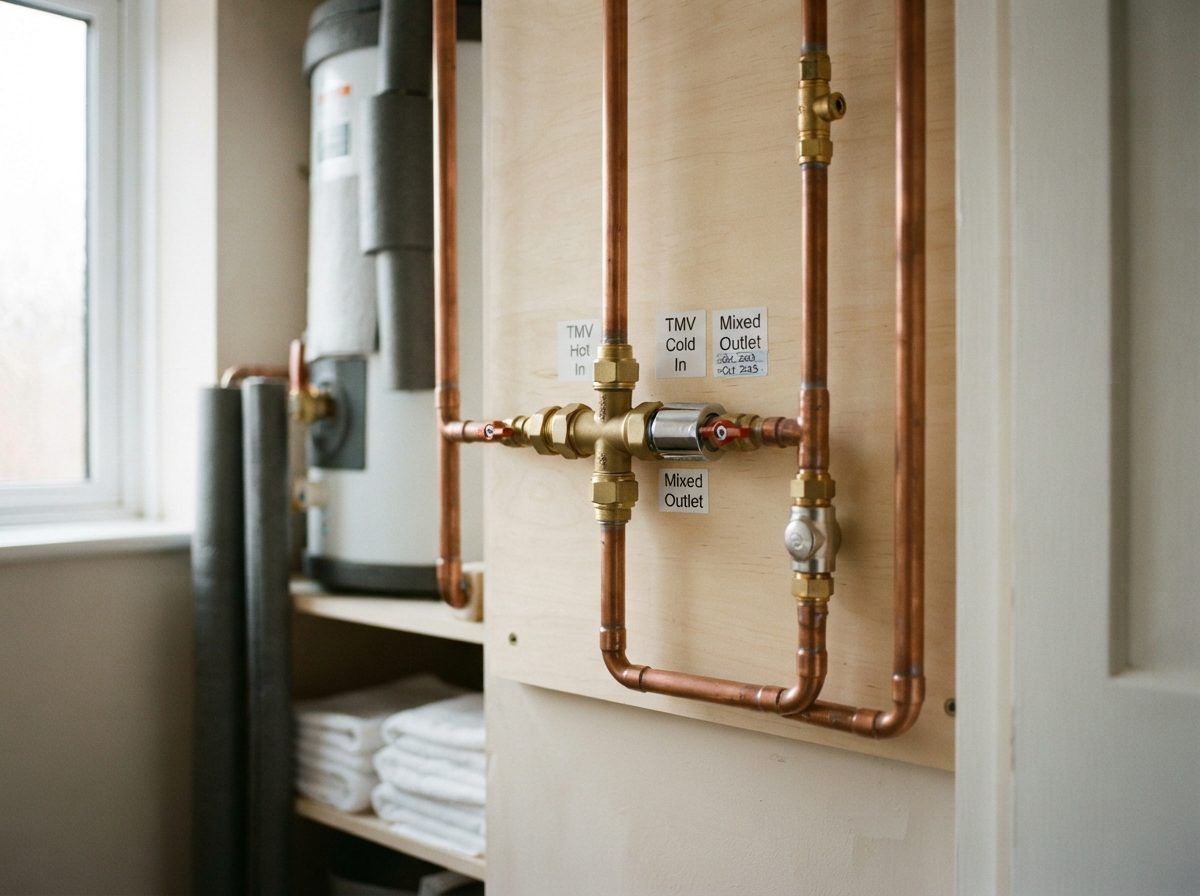
Thermostatic taps: a TMV in the tap body
A thermostatic tap is a basin or sink tap with a thermostatic mixing cartridge built inside it. Instead of a separate valve under the basin or in a duct, the mixing happens right at the spout, so there is almost no length of warm mixed water left standing in pipework. That is a real advantage for Legionella control, and it is why many healthcare taps, sequential lever taps and sensor-operated taps in clinics, care homes, schools and public washrooms are thermostatic.
Because the cartridge is small and sits at the point of use, it is exposed to every bit of scale and debris that reaches the tap. Inlet filters block, cartridges stiffen and the outlet temperature drifts. Healthcare taps often have removable spouts and flow straighteners that need cleaning too, and clinical taps that see little use need flushing. Servicing a thermostatic tap brings all of that together: test the temperature, clean the filters, service or swap the cartridge, check it fails safe and record what was found.
Choose this service where the thermostatic control is in the tap. If a standard tap is fed by a separate TMV under the basin, that is TMV servicing. If the outlet is a shower, see the thermostatic shower valves page. And where an outlet has both a thermostatic tap and a separate TMV, the job usually starts with deciding which one should stay.
Thermostatic tap servicing covers
Work happens at the basin, with each tap isolated in turn. A usual service involves:
- Outlet temperature readingMeasuring the mixed water temperature at the spout once it has stabilised, against the set point for that basin or sink.
- Inlet filtersIsolating the tap and cleaning the inlet filters or strainers in the tails or tap body.
- Cartridge serviceRemoving the thermostatic cartridge, descaling and checking it, and replacing it where it no longer controls temperature.
- Spouts and outletsCleaning or replacing flow straighteners, aerators and removable spouts, which on healthcare taps are designed to come off for this purpose.
- Fail-safe checkIsolating the cold supply to confirm the tap shuts off or drops to a trickle, and checking temperature recovery once it is restored.
- Sensor and lever operationChecking that sensor taps trigger, time out and run correctly, and that lever and sequential handles move freely.
- Flushing and recordsFlushing the outlet after work and recording readings, so the tap's history sits with the rest of your water safety records.
What to sort out first
-
Tap type and make
A photo of the tap and any model marking lets the engineer bring compatible cartridges and seals.
-
Isolation valves
Thermostatic taps need isolators near the tails. Where there are none, fitting them may be part of the job.
-
Clinical areas
Agree which wash-hand basins can be out of use and when, so staff keep access to hand hygiene.
-
Duplicate controls
Note any outlets where a TMV under the basin also feeds a thermostatic tap; those need a decision before servicing.
Good to know about thermostatic taps
-
Two thermostatic controls on one outlet
A separate TMV feeding a thermostatic tap is discouraged. The two controls can work against each other, testing becomes unreliable, and the run between them holds warm water. Usually one is removed and the other kept in good order.
-
Washbasin temperatures
Guidance based on D 08 commonly quotes 41°C as the maximum at washbasins used by vulnerable people. A lower set point can be chosen by risk assessment, but water too cool can discourage hand washing.
-
Flushing little-used taps
HSG274 Part 2 describes flushing outlets that see little use, commonly weekly, and recording it. Thermostatic taps help by keeping the mixed section short, but they still stagnate if left.
-
Healthcare taps are built to be serviced
Many have removable spouts and easily reached cartridges, so routine cleaning can be done in place without disturbing the basin.
Booking thermostatic tap servicing
- 1
Make an enquiry
Say how many thermostatic taps there are, the type of building and any problems you have seen.
- 2
Alex assigns the job
Alex matches the work to a partner engineer covering your area.
- 3
Price agreed up front
It depends on the number of taps, whether cartridges or isolators are needed and access; you confirm it before work starts.
- 4
Taps serviced in turn
Each tap is isolated, serviced, tested and flushed before the next.
- 5
Per-tap results
A visit usually leaves you with readings, fail-safe outcomes and a list of taps that need parts or replacement.
Thermostatic tap questions
Is a thermostatic tap the same as a TMV?
It contains the same kind of thermostatic cartridge and does the same job, so it should be tested and serviced like one.
Why is a TMV plus a thermostatic tap discouraged?
Two thermostatic controls in series make temperature hard to set and test, and the pipe between them holds warm water that can support bacterial growth.
Can the cartridge be cleaned rather than replaced?
Often yes, if it is only lightly scaled. Heavily scaled or worn cartridges are usually replaced.
Do sensor taps need different servicing?
The thermostatic part is the same, but the solenoid, sensor and power supply also need checking, and some sensor taps run their own flushing cycles.
How often should thermostatic taps be serviced?
No law sets a fixed interval. In healthcare, testing follows the D 08 regime and the risk assessment; elsewhere manufacturers commonly suggest at least yearly.
Can you replace a tap that cannot be repaired?
Yes, a partner engineer can fit a replacement thermostatic tap and set and test it.
Related services
Thermostatic taps running hot, cold or weak?
Tell us how many taps you have, where they are and what is happening. Alex will match the job to a partner engineer and agree the price before the visit.
Send an enquiry